
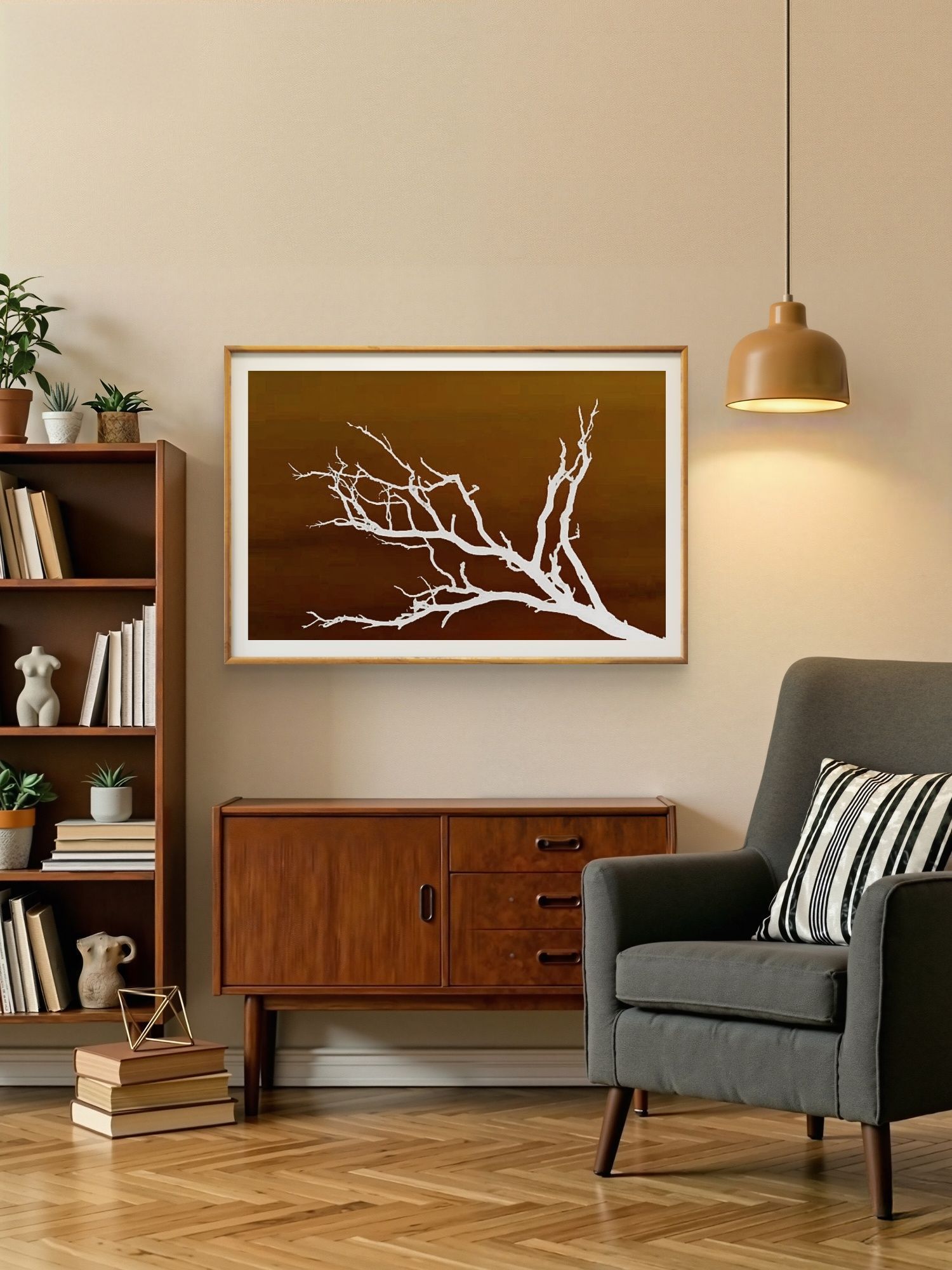
I love watching seagulls. One evening at the beach, the light was beginning to soften and the lake had that quiet glow it gets near sunset. I was watching the gulls move along the shoreline when I noticed a piece of driftwood. It looked like a little tree. Not a dramatic tree. Not something anyone else necessarily would have stopped for. Just a weathered piece of wood shaped by water, sand, time and chance. But I saw branches. So I photographed it. That small discovery eventually became part of an entire visual family. I began isolating the lines, turning the forms, repeating them and watching what happened when one weathered little “tree” became something larger. That is one of my favorite things about creating this way. The original object does not disappear. It simply becomes more than it was. And somewhere inside the finished work, there is still that evening at Lake Michigan — the sunset, the gulls, and one piece of driftwood waiting to be noticed.
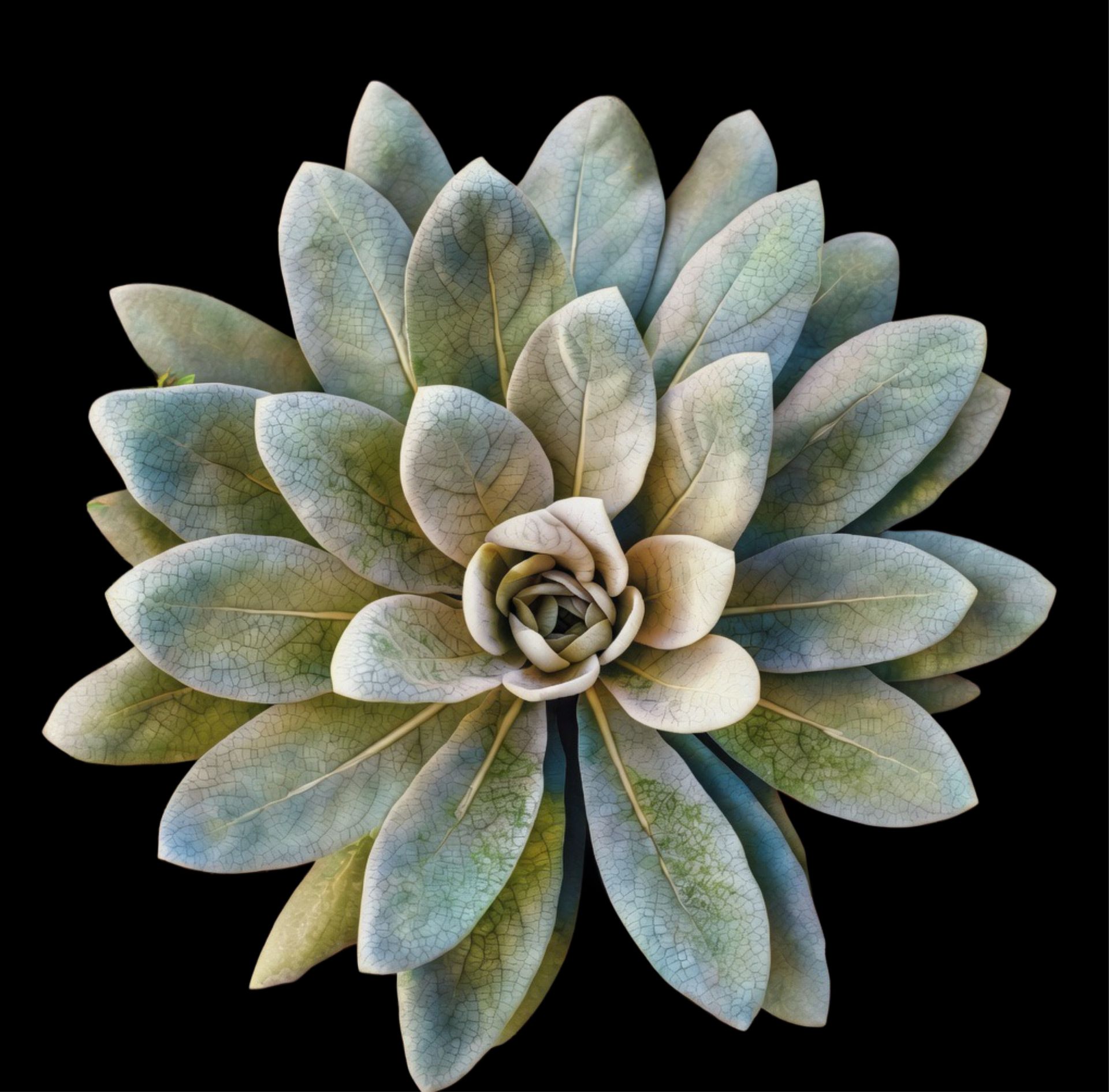
I almost walked right past it. Sally and I were out on the trails when I noticed a mullein rosette growing low to the ground — soft, silvery green, perfectly arranged, and somehow impossible to ignore once I really looked at it. That is often how the work begins for me. Not with a plan. Just with something ordinary asking for a second look. I photographed the rosette, and later began playing with the image. I cropped it, repeated it, turned it, reflected it, changed the scale and watched new shapes begin to appear. One small plant became many pieces. Then those pieces became larger compositions. Mullein kept giving me more than I expected. I also love learning about the plants that grow wild around me. So many of the things we casually call weeds have long histories of traditional use and unexpected value. That makes me look at them differently too. But mostly, this one began because Sally and I were walking through the woods, and I stopped. Sometimes that is all it takes.